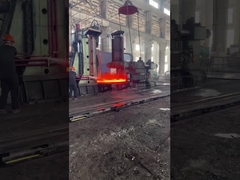
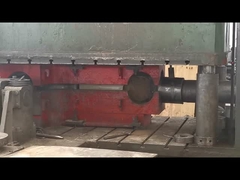
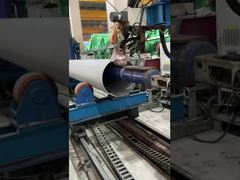
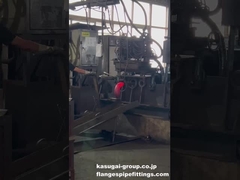
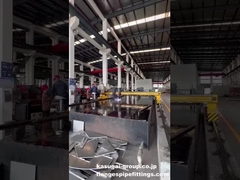
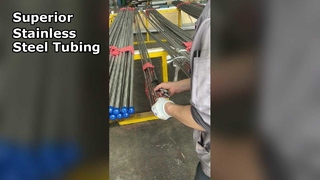
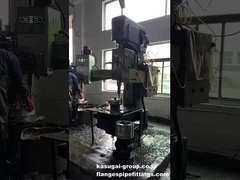
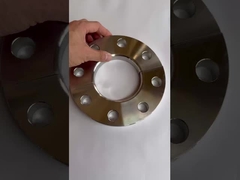
High-pressure die forging

Flange
January 07, 2026
Category Connection: Stainless Steel Pipe Flanges
Brief: We show the practical steps and results so you can judge suitability quickly. This video demonstrates the manufacturing process of high-pressure die forging for Slip On Stainless Steel Pipe Flanges. You'll see how these SO flanges are designed, welded, and tested according to ANSI B16.5 standards, and learn about their ideal applications in various industrial settings.
Related Product Features:
  • Slip On flanges connect to pipes through interior and exterior fillet welds for secure attachment.
  • Available in sizes from 1/2" to 24" with pressure classes ranging from 150 to 1500.
  • Manufactured from ASTM A182 stainless steel for corrosion resistance and durability.
  • Features easier alignment and lower installation costs compared to weld neck flanges.
  • Designed with a low hub profile where the pipe slips into the flange bore.
  • Suitable for marine, chemical production, food industry, and irrigation applications.
  • Undergoes multiple quality tests including spectrograph, hydrostatic, and X-ray inspection.
  • Ideal for moderate pressure services and space-limited installations requiring short tie-ins.
FAQs:
  • What are the main advantages of using slip on flanges over weld neck flanges?
    Slip on flanges offer lower initial cost, easier alignment during installation, and require less time for accurate pipe cutting. However, they typically have a shorter service life (about one-third of weld neck flanges) and require more welding work.
  • What pressure classes and sizes are available for these stainless steel slip on flanges?
    These flanges are available in pressure classes from 150 to 1500 according to ANSI B16.5 standards, with size ranges from 1/2" to 24". Class 150 and Class 300 are most commonly used in utility engineering applications.
  • In what applications are slip on flanges typically used?
    Slip on flanges are generally used in non-corrosive, non-critical, moderate pressure services across various industries including marine applications, pumping systems, chemical production, food processing, and irrigation systems where space limitations necessitate their use.
  • What quality testing and certifications are provided with these flanges?
    Each flange undergoes comprehensive testing including direct-reading spectrograph analysis, hydrostatic testing, X-ray detection, ultrasonic flaw detection, and magnetic particle detection. Certificates provided include raw materials certificates, 100% radiography test reports, and third-party inspection reports.